How to Troubleshoot AC Dismounting and Removal Issues at Home
Want this done properly without the hassle?
Aap DIY try kar sakte hain, lekin agar time nahi ya confidence kam ho, to professional bula lena better hota hai. Galat step se damage ya safety issue ho sakta hai.
Starting from
Rs. 1200
Quick answer (read this first)
- Always disconnect the main power supply to the AC unit before starting any work.
- Thoroughly inspect all connections, bolts, and mounting points for rust, damage, or seized parts.
- Use the correct tools (wrenches, screwdrivers) for each fastener to prevent stripping.
- Never force stuck refrigerant lines; this can cause leaks and system damage.
- Look for hidden clips, tabs, or overlooked screws securing the indoor unit to its wall plate.
Safety first
- Always turn off the main circuit breaker for the AC unit before touching any electrical components.
- Wear safety gloves and eye protection to prevent injuries.
- Do not attempt to cut or forcefully disconnect refrigerant lines without proper knowledge and tools, as it can release harmful gases.
- Ensure stable footing and have assistance if lifting heavy units.
- Never work on electrical wiring with wet hands or in damp conditions.
Tools you may need
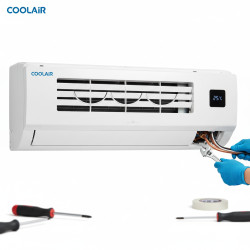
- Screwdriver set (Phillips and flathead)
- Adjustable wrench or spanner set
- Pliers
- Wire cutter/stripper
- Multimeter (for checking power)
- Safety gloves
- Safety glasses
- Penetrating oil
Step-by-step
Step 1
- Initial Safety Check & Power Verification: Before anything, ensure the main circuit breaker for your AC unit is OFF. Use a multimeter to confirm no power is present at the unit’s electrical connections. This is critical to prevent electrical shock.
Step 2
- Clear the Work Area: Remove any furniture, decor, or obstructions around both the indoor and outdoor units to ensure safe, unobstructed access. This prevents accidental damage and allows better maneuverability.
Step 3
- Inspect for Seized Fasteners and Rust: Carefully examine all mounting brackets, bolts, and screws on both units. Look for signs of heavy rust, corrosion, or stripped heads. If bolts are rusted, apply a penetrating oil (like WD-40) and let it soak for a few minutes before attempting to loosen them.
Step 4
- Troubleshoot Stubborn Electrical Connections: If electrical wires are stuck to terminals, avoid pulling forcefully. Gently wiggle them, check for hidden clips, and ensure all securing screws are fully loosened. If wires are crimped or corroded, they might need careful cleaning.
Step 5
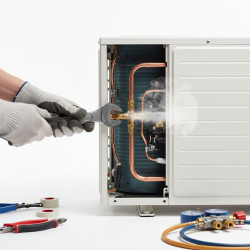
- Address Stuck Refrigerant Lines: Use the correct size adjustable wrench or spanner on the flare nuts of the refrigerant lines. Apply steady, firm pressure to loosen them. Never twist or bend the copper pipes forcefully, as this can cause leaks, damage the lines, or even lead to refrigerant release. If extremely tight, a second wrench can be used for counter-torque.
Step 6
- Resolve Drainage Pipe Issues: Inspect the drainage pipe for a tight fit or adhesion. If it’s stuck, gently twist and pull to separate. If it appears glued or is severely stiff and brittle, careful cutting might be required if the pipe is not to be reused.
Step 7
- Identify Indoor Unit Hidden Fasteners: If the indoor unit doesn’t easily lift off its wall-mounted backplate, thoroughly check the bottom and sides for any overlooked screws, locking tabs, or hidden clips. Sometimes, plastic covers conceal these fasteners.
Step 8
- Overcome Outdoor Unit Bolting Challenges: For outdoor unit bolts that refuse to budge, reapply penetrating oil and give it more time to work. If still stuck, ensure you’re using the correct wrench size to prevent rounding the bolt head. If excessive force is still required, consider professional help to avoid damaging the unit or mounting surface.
Common mistakes
- Forgetting to turn off the main power, leading to electrical shock hazards.
- Applying excessive force when loosening connections, causing damage to pipes or electrical wiring.
- Attempting to handle refrigerant lines without proper knowledge or tools.
- Not adequately supporting units during removal, risking drops and injury.
- Skipping the initial inspection for hidden fasteners or rusted components.
When to call a professional
- If you are unsure how to safely handle the refrigerant or suspect a leak.
- If you encounter complex electrical wiring that you don’t understand or feel unsafe with.
- If the units are too heavy, large, or located in hard-to-reach or elevated positions.
- If bolts or components are severely rusted or seized and cannot be safely loosened.
- If you lack the specialized tools required for specific dismounting tasks.
- If you notice any damage to the unit that could complicate removal or indicate an internal issue.
Want this done properly without the hassle?
Aap DIY try kar sakte hain, lekin agar time nahi ya confidence kam ho, to professional bula lena better hota hai. Galat step se damage ya safety issue ho sakta hai.
Starting from
Rs. 1200
100% Money Back Guarantee
If you are not satisfied with the service