Automatic Tank Switch (ATS) Basic Troubleshooting & Quick Fixes
Want this done properly without the hassle?
Aap DIY try kar sakte hain, lekin agar time nahi ya confidence kam ho, to professional bula lena better hota hai. Galat step se damage ya safety issue ho sakta hai.
Starting from
Rs. 800
Quick answer (read this first)
- An Automatic Tank Switch (ATS) automatically manages your water pump to maintain optimal water levels in your tank.
- Regular checks prevent common issues like dry pumps, overflowing tanks, or inconsistent water supply.
- Basic troubleshooting often involves checking power, connections, and float switch movement for obstructions.
- Always prioritize safety: disconnect all power before any inspection or repair to prevent electrical hazards.
Safety first
- ALWAYS turn off power to the water pump and ATS at the main breaker before touching any components. Verify power is off.
- Never touch exposed wires or attempt electrical repairs if you are not a qualified electrician.
- Use insulated tools and wear rubber gloves if inspecting components close to electrical connections.
- Ensure your hands are completely dry when handling electrical switches or connections.
- Do NOT bypass any safety features of the ATS or water pump system.
- If you encounter water leaks directly from the ATS unit, disconnect power immediately and call a professional.
Tools you may need
- Screwdriver (Phillips/Flathead)
- Flashlight or headlamp
- Clean cloth or brush
- Non-contact voltage tester (recommended for safety)
- Rubber gloves (for added safety)
Step-by-step
Step 1
- Disconnect Power Safely: Locate the main circuit breaker controlling your water pump and ATS. Switch it OFF completely. Use a non-contact voltage tester (if available) to confirm there is no power to the ATS unit and pump.
Step 2
- Locate the ATS Unit: Find the Automatic Tank Switch, typically mounted near your water pump, water storage tank, or within the control panel for your water system.
Step 3
- Perform a Thorough Visual Inspection: Carefully examine the ATS unit, surrounding pipes, and all visible wiring. Look for signs of physical damage, loose connections, frayed or burnt wires, or any water leakage around the unit itself.
Step 4
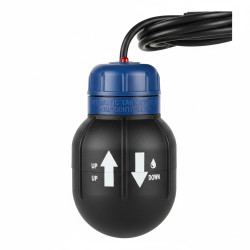
- Check the Float Switch (if applicable): If your ATS uses a float switch, ensure it moves freely without obstruction in the water tank. Remove any debris, grime, or scale that might be hindering its movement. Verify that its wiring is securely connected and undamaged.
Step 5
- Clean External Components: Gently clean any dust, dirt, or corrosion from the exterior of the ATS unit and visible wire terminals using a clean cloth or soft brush. Be careful not to dislodge any wires or components during this process.
Step 6
- Reset the ATS (if applicable): Some ATS models are equipped with a manual reset button. If present, press it firmly to clear any minor internal faults that might be causing the malfunction.
Step 7
- Restore Power and Test Operation: Turn the main circuit breaker back ON. Carefully observe the ATS and water pump. Confirm that the pump activates and deactivates correctly as the water level in the tank changes, indicating proper ATS function.
Common mistakes
- Forgetting to completely turn off the main power supply before inspecting or touching any components.
- Attempting to fix complex electrical wiring without proper knowledge, training, or adequate safety precautions.
- Ignoring minor signs of wear, unusual noises, or small leaks, which can quickly escalate into larger problems.
- Not regularly checking the float switch for blockages, debris, or free movement within the water tank.
- Assuming a simple fix when the problem is systemic, leading to temporary solutions rather than permanent ones.
- Failing to properly test the ATS and pump operation after performing a fix to confirm problem resolution.
When to call a professional
- If the water pump motor hums but fails to pump water even after performing all basic checks.
- If you notice sparks, smell burning, or observe excessive heat emanating from the ATS unit or water pump.
- When there is water leaking directly from the ATS unit itself, indicating internal damage or seal failure.
- For any complex electrical wiring issues, persistent short circuits, or if the pump fails to start despite the float switch moving correctly.
- If you are unsure about any troubleshooting step, feel uncomfortable working with electrical components, or lack the necessary tools.
- When persistent issues reoccur after attempting basic troubleshooting and quick fixes.
Want this done properly without the hassle?
Aap DIY try kar sakte hain, lekin agar time nahi ya confidence kam ho, to professional bula lena better hota hai. Galat step se damage ya safety issue ho sakta hai.
Starting from
Rs. 800
100% Money Back Guarantee
If you are not satisfied with the service