How to do a Basic Chandelier Safety Check and Quick Fixes
Want this done properly without the hassle?
Aap DIY try kar sakte hain, lekin agar time nahi ya confidence kam ho, to professional bula lena better hota hai. Galat step se damage ya safety issue ho sakta hai.
Quick answer (read this first)
- Always cut power at the main breaker first.
- Visually inspect for loose parts or damaged wiring.
- Securely tighten all bulbs and decorative components.
- Clean the fixture for better illumination and problem detection.
Safety first
- ALWAYS turn off the main circuit breaker for the chandelier’s circuit before starting any work.
- Confirm power is off using a non-contact voltage tester before touching any part of the fixture.
- Do not attempt to repair frayed, exposed, or burnt wires yourself – this requires a professional.
- Use a sturdy, stable ladder or step stool and ideally have someone spot you for safety.
- Never touch exposed wiring or metal components when the power is active.
Tools you may need
- Non-contact voltage tester
- Screwdriver set (Phillips and flathead)
- Sturdy ladder or step stool
- Soft cleaning cloths and mild cleaning solution (optional)
- Spare light bulbs
- Gloves (optional, for cleaning or handling)
Step-by-step
Step 1
Step 1: Cut the Power Supply. Locate the specific circuit breaker for your chandelier in the main electrical panel and switch it to the ‘OFF’ position. Tag it to prevent accidental re-engagement.
Step 2
Step 2: Verify Power is Off. Use a non-contact voltage tester to confirm that no electricity is flowing to the chandelier. Touch the tester to the wires near the fixture and the fixture itself. If it beeps or lights up, the power is still on.
Step 3
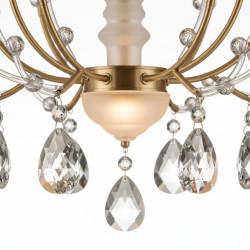
Step 3: Conduct a Visual Inspection. Using a stable ladder, carefully inspect the entire chandelier for any visible damage. Look for loose screws, hanging parts, cracks in the glass or metal, and especially any signs of wear, fraying, or charring on the electrical wires where they enter the fixture or connect to bulbs. If you spot damaged wiring, stop here and call a professional.
Step 4
Step 4: Check and Replace Bulbs. Carefully screw in any loose light bulbs. Replace any burnt-out bulbs with new ones of the correct wattage and type. Ensure they are seated firmly but do not overtighten.
Step 5
Step 5: Tighten Loose Components. Gently tighten any decorative elements, arms, chains, or mounting screws that appear loose. Be careful not to overtighten, which could strip threads or crack materials. Ensure the fixture feels secure.
Step 6
Step 6: Clean the Chandelier. With the power still off, use a soft, dry or slightly damp cloth to clean the chandelier’s surface, bulbs, and decorative elements. This improves light output and helps you spot minor issues.
Step 7
Step 7: Restore Power and Test. Once all checks and minor fixes are complete, safely descend from the ladder. Go back to your main electrical panel and switch the chandelier’s circuit breaker back to the ‘ON’ position.
Step 8
Step 8: Observe Operation. Turn on the chandelier and carefully observe its operation. Confirm that all bulbs light up correctly, there is no flickering, buzzing, or unusual smells. If any issues persist, proceed to the ‘When to Call a Pro’ section.
Common mistakes
- Failing to completely turn off and verify the power supply, leading to shock hazards.
- Using unstable furniture (like chairs or stools) instead of a sturdy, proper ladder for elevated work.
- Over-tightening light bulbs or decorative components, which can strip threads, crack glass, or damage the fixture.
- Disregarding warning signs like consistent flickering, buzzing sounds, or odd smells, which often signal deeper electrical problems.
- Attempting complex electrical repairs, such as fixing frayed wires or re-wiring, without proper training and tools.
When to call a professional
- If your chandelier consistently flickers, buzzes, or trips the circuit breaker after basic checks.
- If you discover any exposed, frayed, melted, or burnt wiring on the fixture or at the ceiling connection.
- If the chandelier fixture, canopy, or chain feels unusually hot to the touch.
- If you are installing a new chandelier, relocating an existing one, or modifying the electrical wiring.
- If you feel uncomfortable performing any step, are unsure about the electrical work, or if the problem persists despite your efforts.
Want this done properly without the hassle?
Aap DIY try kar sakte hain, lekin agar time nahi ya confidence kam ho, to professional bula lena better hota hai. Galat step se damage ya safety issue ho sakta hai.