How to do a basic Door Chain Latch safety check and quick fixes
Want this done properly without the hassle?
Aap DIY try kar sakte hain, lekin agar time nahi ya confidence kam ho, to professional bula lena better hota hai. Galat step se damage ya safety issue ho sakta hai.
Quick answer (read this first)
- Tighten all loose screws on the latch plates.
- Lubricate the chain and its channel for smooth operation.
- Verify the chain and receiver plates are perfectly aligned.
- Regularly test the latch’s security and function.
Safety first
- Always wear eye protection to prevent injury from flying debris or tools.
- Use the correct size screwdriver to avoid stripping screws or damaging the door/frame.
- Be gentle when tightening screws to prevent stripping wood or cracking the door material.
- If the door or frame is severely damaged, stop immediately and consult a professional to avoid compromising security.
- Keep all tools and small parts out of reach of children and pets during the process.
Tools you may need
- Screwdriver (Phillips and/or flathead)
- Lubricating spray (e.g., WD-40 or silicone spray)
- Clean cloth
Step-by-step
Step 1
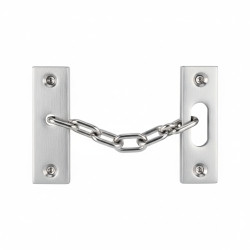
Initial Visual Inspection: Carefully examine the entire chain latch assembly on both the door and the frame. Look for any visible signs of damage, cracks, rust, bent components, or excessive wear on the chain links or plates.
Step 2
Test Latch Engagement: Close the door and engage the chain latch. Gently try to push the door open. The latch should firmly secure the door, allowing minimal movement. Note any excessive play or difficulty in engagement.
Step 3
Tighten Loose Screws: Using the correct screwdriver, check all screws securing both the chain plate on the door and the receiver plate on the frame. Gently tighten any screws that feel loose. Be careful not to overtighten and strip the wood.
Step 4
Clean the Chain Channel: Inspect the channel or slot where the chain slides into the receiver plate. Use a clean cloth to wipe away any accumulated dust, dirt, or debris that might be hindering smooth operation.
Step 5
Lubricate Moving Parts: Apply a small amount of lubricating spray (like silicone or dry lubricant) directly onto the chain and inside the channel. Move the chain back and forth several times to evenly distribute the lubricant and work it into the mechanism.
Step 6
Check Alignment of Plates: With the chain disengaged, visually confirm that the chain plate on the door and the receiver plate on the frame are perfectly aligned. Misalignment can prevent smooth operation or proper engagement.
Step 7
Address Stiffness (if needed): If the latch still feels stiff after lubrication, continue to work the chain back and forth through its full range of motion until it moves freely. Reapply lubricant if necessary.
Step 8
Final Security Test: After completing all adjustments and fixes, fully engage the chain latch, close the door, and try to push the door open from the inside. Ensure the latch holds securely and operates smoothly.
Common mistakes
- Over-tightening screws, which can strip the wood and cause the latch to become loose again.
- Using the wrong size screwdriver, leading to damaged screw heads and difficulty in tightening or removal.
- Ignoring minor stiffness or looseness, allowing small problems to escalate into major security risks.
- Forgetting to lubricate the chain and channel regularly, causing friction, stiffness, and premature wear.
- Forcing a misaligned latch, which can bend components or damage the door/frame.
When to call a professional
- If screws are stripped and no longer hold the latch plates securely to the door or frame.
- If there is significant damage to the door, door frame, or the latch itself that impacts its structural integrity.
- If the internal mechanism of the chain latch is broken, preventing it from engaging or disengaging properly.
- If you are uncomfortable performing the repair, lack the necessary tools, or are unsure about any step.
- For new installations or if the existing latch requires major adjustments beyond simple tightening or lubrication.
Want this done properly without the hassle?
Aap DIY try kar sakte hain, lekin agar time nahi ya confidence kam ho, to professional bula lena better hota hai. Galat step se damage ya safety issue ho sakta hai.