How to Troubleshoot Door Lock Installation Issues at Home
Want this done properly without the hassle?
Aap DIY try kar sakte hain, lekin agar time nahi ya confidence kam ho, to professional bula lena better hota hai. Galat step se damage ya safety issue ho sakta hai.
Quick answer (read this first)
- First, confirm all screws on the lock body, handles, and strike plate are tight.
- Next, check if the latch bolt properly aligns with the strike plate opening on the door frame.
- If the lock is stiff, apply a suitable lubricant (like graphite) into the keyway.
- Ensure the spindle connecting the handles is correctly engaged and not loose.
- Verify the door itself is not binding or misaligned within its frame.
Safety first
- Always wear safety glasses to protect your eyes from debris.
- Handle all tools, especially screwdrivers and chisels, with extreme care to avoid injury.
- Never force a lock mechanism; excessive force can cause further damage or personal injury.
- Ensure the work area is clear of children and pets before you begin.
Tools you may need
- Screwdriver set (Phillips head and flathead)
- Pencil
- Measuring tape
- Hammer or rubber mallet (for minor adjustments)
- Utility knife or wood chisel (for strike plate recess adjustments)
- Appropriate lubricant (e.g., graphite powder for cylinders, silicone spray for latches)
- Clean rags or cloth
Step-by-step
Step 1
Inspect Door and Frame Alignment: Begin by checking if the door itself is properly aligned within its frame. Ensure there are no visible gaps, sagging, or binding that prevents the door from closing smoothly before the lock even engages.
Step 2
Tighten All Visible Screws: Systematically check and tighten all screws on the lock components, including the doorknobs/handles, the escutcheon plates, the lock body itself, and especially the strike plate on the door frame. Loose screws are a primary cause of play and misalignment.
Step 3
Test Lock Mechanism (Door Open): Open the door fully and operate the lock (turn the key, press the thumb turn, or engage the knob/lever). If the lock mechanism functions smoothly when the door is open, the problem likely lies with the door frame, strike plate, or door alignment, not the lock’s internal mechanism.
Step 4
Verify Latch Bolt and Strike Plate Alignment: With the door slightly ajar, carefully close it until the latch bolt touches the strike plate. Use a pencil to mark the exact point where the latch bolt makes contact. If it’s not centered, you may need to adjust the strike plate’s position or carefully widen the strike plate hole with a utility knife or chisel.
Step 5
Address Stiff Key Turning or Mechanism: If the key turns with difficulty or the internal mechanism feels stiff, apply a small amount of appropriate lubricant. For lock cylinders, use graphite powder; for latch bolts and internal moving parts, a silicone spray can be effective. Avoid using oily lubricants inside the keyway as they can attract dirt.
Step 6
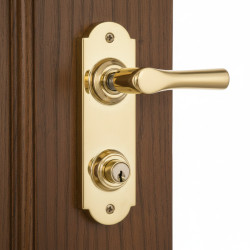
Check Spindle Engagement for Loose Handles: If the handles feel wobbly or don’t operate the latch effectively, examine the spindle (the square bar that connects the two handles through the lock body). Ensure it’s correctly inserted, fully extended, and securely engaging both handle mechanisms. Reinsert or adjust if it appears loose or dislodged.
Step 7
Evaluate for Door Binding or Hinge Issues: If the door still binds or the lock doesn’t engage smoothly, inspect the door hinges. Loose or bent hinges can cause the door to sag, leading to misalignment. Tighten hinge screws or, if necessary, consider shimming hinges for minor vertical adjustments.
Common mistakes
- Overtightening screws, which can strip threads, damage the lock components, or crack the door wood.
- Ignoring subtle door or frame misalignments, which can cause continuous lock issues and premature wear.
- Applying excessive force to a stiff or jammed mechanism instead of systematically troubleshooting and lubricating.
- Using an unsuitable lubricant (e.g., oil in a key cylinder) that can attract dust and eventually worsen the problem.
- Failing to check all related components, including hinges and the door frame, as they can directly impact lock function.
- Not identifying the root cause of the problem before attempting a fix, leading to recurring issues.
When to call a professional
- If the lock mechanism is completely jammed, broken internally, or cannot be freed after basic troubleshooting.
- If the door frame, door itself, or hinges are severely warped, damaged, or require structural repair.
- If you do not have the right tools, feel uncomfortable performing the adjustments, or are unsure of the next steps.
- If the problem persists or recurs even after carefully following all the troubleshooting steps.
- For high-security locks, smart lock systems, or if the issue involves complex internal components you’re unfamiliar with.
Want this done properly without the hassle?
Aap DIY try kar sakte hain, lekin agar time nahi ya confidence kam ho, to professional bula lena better hota hai. Galat step se damage ya safety issue ho sakta hai.