How to Troubleshoot Electric Geyser Power Point Issues at Home
Want this done properly without the hassle?
Aap DIY try kar sakte hain, lekin agar time nahi ya confidence kam ho, to professional bula lena better hota hai. Galat step se damage ya safety issue ho sakta hai.
Starting from
Rs. 1200
Quick answer (read this first)
- Confirm the geyser’s main switch is firmly ON.
- Check your home’s distribution board for a tripped circuit breaker or blown fuse.
- Inspect the geyser’s power plug and cord for any visible damage or burn marks.
- Test the power outlet by plugging in another small, working appliance.
- Always turn off the main power supply before any inspection and call a professional for complex faults.
Safety first
- ALWAYS switch off the main power supply to the geyser’s circuit at the distribution board before touching any electrical components.
- Never touch live wires, wet electrical parts, or work with wet hands or feet.
- Use only insulated tools for any inspection or minor adjustments.
- Do not attempt any repair or diagnostic step if you are unsure or uncomfortable; immediately call a qualified electrician.
- Be aware of burning smells, sparks, or persistent buzzing sounds; these indicate a serious fault and require immediate professional help.
Tools you may need
- Voltage tester (multimeter, non-contact tester, or test lamp)
- Insulated screwdrivers (Phillips and Flathead)
- Torch or flashlight
- Insulated gloves (highly recommended)
Step-by-step
Step 1
- Verify Geyser Switch and Indicator Light: Ensure the geyser’s dedicated ON/OFF switch is firmly in the ‘ON’ position. Check for any indicator light on the geyser or its switch; if it’s off, power isn’t reaching it. If there’s a separate thermostat knob, ensure it’s set to a heating temperature.
Step 2
- Inspect Power Plug and Cord: First, turn off the geyser’s switch. Carefully pull out the geyser’s power plug from the wall socket. Look for any burn marks, discoloration, loose pins, or physical damage on the plug. Examine the entire power cord for cuts, fraying, exposed wires, or signs of overheating like melted plastic. If any damage is found, do NOT re-plug and call a professional.
Step 3
- Check Circuit Breaker or Fuse Box: Go to your home’s main electrical distribution board. Locate the circuit breaker labeled for the geyser (or the bathroom/kitchen area). If it’s tripped, it will be in the ‘OFF’ or middle position. Firmly push it to the ‘OFF’ position first, then to ‘ON’. For fuse boxes, check if the geyser’s fuse wire is broken; replace only if you know the correct amperage and how to do so safely, otherwise call an electrician.
Step 4
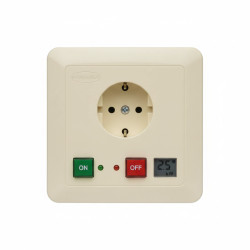
- Test the Power Outlet: With the geyser unplugged and main power to the outlet confirmed ON (from step 3), plug in a small, known-working appliance (e.g., a phone charger, table lamp, or small fan) into the same geyser power outlet. If this appliance does not work, the issue is with the power outlet itself, indicating no power supply to it. If the appliance works, the outlet is likely fine, and the problem may be with the geyser or its plug/cord.
Step 5
- Inspect for Loose Wiring at the Outlet (Extreme Caution!): ONLY attempt this step if you are experienced and have completely turned OFF the main power to the entire outlet circuit at the distribution board. Gently remove the cover plate of the power outlet. Carefully observe if any wires are visibly loose, disconnected, or show signs of burning/scorching around the terminals. Do NOT touch any wires unless you are absolutely certain the power is off. If you see loose wires, burnt spots, or are unsure, do NOT attempt to fix it; secure the cover and call an electrician immediately.
Step 6
- Consider Geyser Internal Faults: If all external power point checks (switch, plug, cord, circuit breaker, and outlet power) indicate no problem, the fault likely lies within the geyser itself. This could be a malfunctioning thermostat, a burnt-out heating element, or internal wiring issues. These internal repairs require a qualified geyser technician.
Common mistakes
- Ignoring safety protocols like turning off the main power supply before inspection.
- Assuming the geyser is faulty without thoroughly checking the power supply.
- Touching exposed wires or electrical components without proper insulation or expertise.
- Disregarding warning signs such as burning smells, sparks, or hot outlets.
- Attempting complex electrical repairs or internal geyser diagnostics without professional training.
- Repeatedly resetting a tripping circuit breaker without investigating the underlying cause.
When to call a professional
- The circuit breaker for the geyser trips repeatedly, even after you reset it.
- You detect burning smells, hear persistent buzzing sounds, or see sparks from the outlet, plug, or geyser.
- The power outlet is visibly damaged, charred, discolored, or feels hot to the touch.
- Your voltage tester indicates no power at the outlet, and you’re not confident diagnosing further.
- After performing all external power point checks, the geyser still doesn’t work, indicating a potential internal fault (e.g., thermostat, heating element).
- You feel uncomfortable, unsure, or lack the necessary tools and expertise at any stage of troubleshooting.
Want this done properly without the hassle?
Aap DIY try kar sakte hain, lekin agar time nahi ya confidence kam ho, to professional bula lena better hota hai. Galat step se damage ya safety issue ho sakta hai.
Starting from
Rs. 1200
100% Money Back Guarantee
If you are not satisfied with the service