How to Troubleshoot Power Plug Installation Issues at Home
Want this done properly without the hassle?
Aap DIY try kar sakte hain, lekin agar time nahi ya confidence kam ho, to professional bula lena better hota hai. Galat step se damage ya safety issue ho sakta hai.
Quick answer (read this first)
- Check if the circuit breaker for the area is tripped.
- Verify that Live, Neutral, and Earth wires are connected to their correct terminals.
- Use a voltage tester or multimeter to confirm electricity supply.
- Inspect for loose connections or any visible damage to the socket.
Safety first
- Always turn off the main power supply to the affected area at the circuit breaker and confirm it’s off.
- Use only insulated tools designed for electrical work.
- Never touch bare wires directly or with uninsulated objects.
- Ensure your hands are dry and you are working in a dry, well-lit environment.
- If at any point you feel unsure, uncomfortable, or encounter unexpected issues, stop immediately and call a qualified electrician.
Tools you may need
- Screwdriver set (flathead and Phillips)
- Voltage tester or Multimeter
- Wire strippers (optional, if wires need re-stripping)
- Insulation tape (optional, for securing loose insulation)
Step-by-step
Step 1
Locate your home’s main distribution board and switch off the circuit breaker that supplies power to the affected plug. Crucially, use a voltage tester or multimeter to verify that the power is completely off at the socket before proceeding.
Step 2
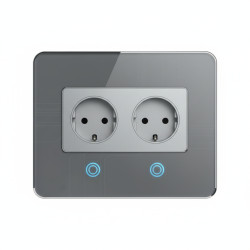
Carefully unscrew and remove the faceplate of the power plug. Gently pull the plug assembly slightly out from the wall box to expose the wiring connections.
Step 3
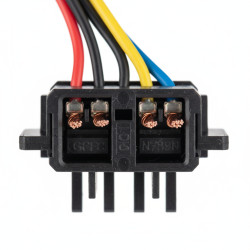
Visually inspect all wires and connections. Look for any signs of loose connections, frayed insulation, discolored wires, or burn marks. Ensure the Live (usually red or brown), Neutral (usually black or blue), and Earth (usually green or green/yellow striped) wires are correctly connected to their designated terminals on the plug body.
Step 4
Using the appropriate screwdriver, carefully tighten all terminal screws for the Live, Neutral, and Earth wires. Ensure no bare wire strands are loose or straying outside the terminals, which can cause short circuits.
Step 5
Inspect the internal plastic body of the socket for any visible cracks, burn marks, or signs of overheating. Check the insulation around the wires for damage. If the socket body is damaged or wires are extensively burnt/frayed, it’s best to replace the entire socket.
Step 6
Carefully push the wires and plug assembly back into the wall box, ensuring no wires are pinched. Reattach the faceplate. Restore power at the main circuit breaker. Plug in a simple, known-working appliance (like a lamp or phone charger) to test the plug’s functionality.
Common mistakes
- Forgetting to turn off the main power supply before starting work.
- Incorrectly identifying or connecting the Live, Neutral, and Earth wires.
- Leaving wire strands exposed or connections loose, which can lead to short circuits.
- Not using a voltage tester to confirm the power is off.
- Attempting repairs without adequate knowledge or proper tools.
When to call a professional
- If you discover extensive burn marks, melting, strong burning smells, or significant damage to the wiring or socket.
- If the problem originates from your main distribution board, circuit breakers, or involves the entire electrical circuit.
- If you feel uncomfortable or uncertain at any point during the troubleshooting process.
- If the issue persists even after carefully following all the safe troubleshooting steps in this guide.
- If the problem affects multiple power outlets, causes repeated tripping of circuit breakers, or indicates a deeper electrical fault.
Want this done properly without the hassle?
Aap DIY try kar sakte hain, lekin agar time nahi ya confidence kam ho, to professional bula lena better hota hai. Galat step se damage ya safety issue ho sakta hai.