How to Troubleshoot Tube Light Holder Replacement Issues
Want this done properly without the hassle?
Aap DIY try kar sakte hain, lekin agar time nahi ya confidence kam ho, to professional bula lena better hota hai. Galat step se damage ya safety issue ho sakta hai.
Quick answer (read this first)
- Always turn off power at the main breaker before starting.
- Check for loose or incorrect wire connections within the holder and circuit.
- Ensure the tube light itself and the starter are functional by testing with known good parts.
- Inspect the choke (ballast) for any signs of damage or incorrect wiring.
- Confirm correct live and neutral wiring polarity to avoid issues.
- Use a voltage tester cautiously to confirm power presence at the holder.
Safety first
- ALWAYS turn off electricity from the main breaker before touching any wiring or components.
- Use insulated tools specifically designed for electrical work.
- Wear rubber-soled shoes for added insulation against electrical shock.
- Never work with wet hands or in damp conditions, as this significantly increases risk.
- If you are unsure about any step, feel uncomfortable, or encounter unexpected issues, stop immediately and call a professional.
Tools you may need
- Screwdriver (flathead and Phillips)
- Electrical tape
- Wire stripper/cutter
- Voltage tester or multimeter (non-contact tester recommended)
- New tube light (for testing)
- New starter and choke (for testing, if applicable)
Step-by-step
Step 1
Cut Off Power: Go to your main electrical breaker and switch off the power to the tube light’s circuit. Confirm the power is off using a non-contact voltage tester before touching any wiring.
Step 2
Initial Visual Check: Inspect the tube light holder for any visible damage, loose components, or scorch marks. Also, check the tube light itself for cracks, blackened ends, or damaged pins.
Step 3
Test Tube & Starter: Remove the existing tube light and starter. Insert a new, known working tube light and a new starter into the holder. Briefly turn on power to test. If it works, the old components were faulty. Switch power off again.
Step 4
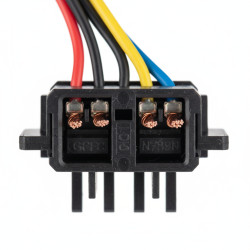
Examine Holder Wiring: With power OFF, open the holder’s casing. Ensure all wires are securely connected to their respective terminals, are correctly stripped, and that live (usually red/brown) and neutral (usually black/blue) connections are not swapped or loose.
Step 5
Inspect Circuit Wires: Check the wires entering the holder from the wall or ceiling. Look for any cuts, fraying, or loose connections that might have occurred during the holder replacement process.
Step 6
Verify Choke/Ballast: If your tube light fixture uses a choke (also known as a ballast), examine its wiring. Confirm all connections are secure and the choke itself shows no signs of damage, swelling, or overheating. A faulty choke can prevent light operation.
Step 7
Cautious Power Test: Only if you are comfortable and with extreme caution, briefly turn on the main power. Use a voltage tester to confirm electricity is reaching the holder’s input terminals. IMMEDIATELY switch power OFF after testing.
Step 8
Final Assembly & Test: After completing all inspections and necessary fixes, carefully reassemble the holder, ensuring no wires are pinched. Insert your tube light and starter, then restore main power and test the tube light.
Common mistakes
- Not turning off the main power, which can lead to severe electric shock.
- Incorrectly wiring the holder, especially swapping live and neutral connections or making loose connections.
- Using damaged or low-quality wires or components during replacement.
- Assuming the holder is the only issue; often the starter, choke, or tube light itself is faulty.
- Leaving loose wire connections, which can cause flickering, intermittent operation, or even short circuits and fire hazards.
When to call a professional
- If you detect burning smells, smoke, or observe visible sparking from the fixture or wiring.
- If the main circuit breaker trips repeatedly after you’ve attempted a fix.
- When you are uncomfortable or unsure about any step of the troubleshooting process.
- After performing basic troubleshooting steps, the issue persists, indicating a deeper electrical problem.
- If the problem seems to be related to your home’s main electrical wiring system rather than just the fixture.
Want this done properly without the hassle?
Aap DIY try kar sakte hain, lekin agar time nahi ya confidence kam ho, to professional bula lena better hota hai. Galat step se damage ya safety issue ho sakta hai.