How to Troubleshoot Voltage Stabilizer Installation Issues at Home
Want this done properly without the hassle?
Aap DIY try kar sakte hain, lekin agar time nahi ya confidence kam ho, to professional bula lena better hota hai. Galat step se damage ya safety issue ho sakta hai.
Quick answer (read this first)
- Check all wiring connections for security and correctness.
- Verify the stabilizer’s input and output voltage readings.
- Ensure the stabilizer is appropriately sized for your total appliance load.
- Inspect stabilizer settings and bypass switches.
Safety first
- Always turn off main power before touching any wires or connections.
- Use only insulated tools designed for electrical work.
- Never work with wet hands, wet clothing, or while standing in water.
- If you are unsure about any step, do not proceed and call a qualified professional.
- Wear appropriate personal protective equipment, including safety glasses and electrical gloves.
Tools you may need
- Multimeter/Voltmeter
- Screwdriver set (Philips and flathead, insulated if possible)
- Wire stripper/cutter
- Electrical tape
- Insulated pliers
Step-by-step
Step 1
Prioritize Safety: Turn off the main circuit breaker that supplies power to the voltage stabilizer. Use your multimeter to confirm that there is no power at the stabilizer’s terminals before proceeding with any physical checks.
Step 2
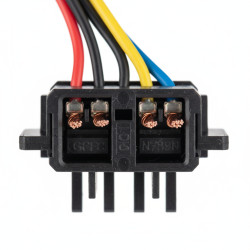
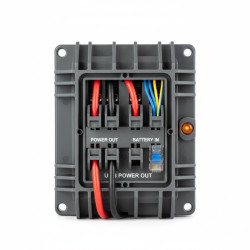
Inspect Input Wiring: Carefully check that the main power supply wires are securely and correctly connected to the ‘Input’ terminals of your voltage stabilizer. Look for any loose screws, corrosion, or signs of damage to the wiring.
Step 3
Verify Output Wiring: Ensure that the wires leading from the stabilizer to your home’s distribution board or specific appliances are firmly and correctly connected to the ‘Output’ terminals. Confirm proper polarity where applicable.
Step 4
Visual Inspection of All Connections: With the main power still off, visually examine all accessible electrical connections related to the stabilizer. Look for frayed wires, cracked insulation, discolored wires (indicating overheating), or burn marks. Tighten any loose terminal screws.
Step 5
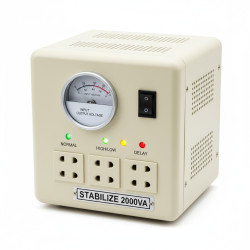
Check Stabilizer Settings and Bypass: Confirm that the stabilizer’s main power switch is in the ‘ON’ position. If your stabilizer has a bypass switch, ensure it is correctly set to the ‘Stabilizer’ or ‘Normal’ operating mode, not ‘Bypass’, which would directly feed mains power.
Step 6
Measure Input Voltage: Restore main power to the circuit. Using a multimeter, carefully measure the voltage coming into the stabilizer (across its input terminals). Confirm this voltage falls within the operating range specified by the stabilizer’s manufacturer.
Step 7
Measure Output Voltage: While the power is on, measure the voltage exiting the stabilizer (across its output terminals). This should be a stable voltage, typically around 220-230V in Pakistan. If the output voltage is fluctuating erratically or is incorrect, it suggests an issue with the stabilizer itself or an overload.
Step 8
Assess Load Capacity: If the stabilizer displays an overload indicator, frequently trips, or becomes excessively hot, it might be undersized for your total appliance load. Unplug some non-essential appliances and re-test. Compare the stabilizer’s wattage capacity with the total wattage of all connected appliances.
Common mistakes
- Incorrect wiring during installation, such as reversing input and output connections.
- Overloading the stabilizer by connecting too many high-power appliances.
- Leaving loose or corroded electrical connections, leading to poor performance or hazards.
- Installing a stabilizer that is undersized for the household’s total electrical load.
- Neglecting to turn off the main power before attempting any troubleshooting or repairs.
When to call a professional
- If you notice burning smells, smoke, or sparking from the stabilizer unit or connections.
- If you are uncomfortable or lack the necessary experience to work with household electricity safely.
- If the stabilizer unit itself appears physically damaged, such as bulging, cracks, or severe discoloration.
- If the problem persists after you have performed all basic troubleshooting steps.
- For complex internal faults within the stabilizer unit, or if the issue seems beyond simple connection fixes.
Want this done properly without the hassle?
Aap DIY try kar sakte hain, lekin agar time nahi ya confidence kam ho, to professional bula lena better hota hai. Galat step se damage ya safety issue ho sakta hai.