DIY Baby Safety Gate Installation: Step-by-Step Troubleshooting and When to Call a Professional
Want this done properly without the hassle?
Aap DIY try kar sakte hain, lekin agar time nahi ya confidence kam ho, to professional bula lena better hota hai. Galat step se damage ya safety issue ho sakta hai.
Quick answer (read this first)
- Use pressure-mounted gates only on flat, non-stairway openings; screw-in gates are mandatory for stairs.
- Always test the gate by pushing hard from both sides—any movement means it’s unsafe.
- Never install a gate at the top of stairs without professional help—fall risks are life-threatening.
Safety first
- Never use a gate with gaps larger than 2.5 inches—babies’ heads can become trapped.
- Avoid gates with horizontal bars or rungs that a baby can use to climb.
- Inspect for sharp edges, loose screws, or exposed hardware after installation.
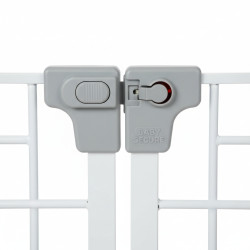
- Ensure the latch is out of baby’s reach and cannot be opened by small hands.
- Never install a gate that swings open toward stairs or drop-offs.
Tools you may need
- Measuring tape
- Screwdriver (Phillips and flathead)
- Level (optional but recommended for even mounting)
- Pencil for marking drill points
- Hammer (for installing wall anchors in plaster or brick)
- Drill with appropriate bit for wall type
Step-by-step
Step 1
Measure the width of the opening at the top, middle, and bottom to ensure consistent space.
Step 2
Select a pressure-mounted gate for flat walls between rooms, or a screw-in gate for stairs or uneven surfaces.
Step 3
Extend the gate to fit snugly without forcing it—there should be no gaps or wobbling when pressed.
Step 4
If using a screw-in gate, mark drill points with a pencil, ensuring they align with wall studs or solid backing.
Step 5
Drill pilot holes and insert wall anchors if working with plaster, hollow brick, or weak walls—never rely on screws alone.
Step 6
Secure the gate with all screws, then test it by pushing firmly from both sides with both hands—repeat until it holds firm.
Common mistakes
- Using pressure-mounted gates at the top of stairs—this is extremely dangerous and can lead to falls.
- Installing the gate so it opens toward stairs or hazards instead of away from them.
- Ignoring wall type—plaster and hollow brick require anchors, not just screws, or the gate will pull out.
- Over-tightening pressure gates, which can crack door frames or damage wall surfaces in Pakistani homes.
- Skipping the test push—always simulate a child’s full weight and force before trusting the gate.
- Failing to check the latch mechanism daily—babies learn quickly and may figure out how to open it.
When to call a professional
- If installing a gate at the top of stairs and you’re unsure about wall strength or structure.
- If walls are cracked, uneven, made of hollow plaster, or lack solid backing for anchors.
- If the gate loosens repeatedly—even after correct installation and anchor use.
- If you’re uncomfortable using drills, hammering, or working with wall anchors safely.
- If the opening is wider than 48 inches or irregularly shaped—professional fitting is required.
Want this done properly without the hassle?
Aap DIY try kar sakte hain, lekin agar time nahi ya confidence kam ho, to professional bula lena better hota hai. Galat step se damage ya safety issue ho sakta hai.