How to prevent common Change Over Switch Install problems and when to call a pro
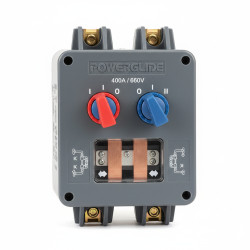
Want this done properly without the hassle?
Aap DIY try kar sakte hain, lekin agar time nahi ya confidence kam ho, to professional bula lena better hota hai. Galat step se damage ya safety issue ho sakta hai.
Quick answer (read this first)
- Always turn off all main power sources before beginning electrical work.
- Select wire gauges appropriate for your household’s total electrical load.
- Confirm correct phase, neutral, and earth connections for system safety.
- Thoroughly test the change-over switch functionality after installation.
- Consult a certified electrician immediately if you are unsure about any wiring step.
Safety first
- Completely disconnect all main power supplies (utility, generator, UPS/inverter) at their respective breakers.
- Utilize only insulated tools specifically designed and rated for electrical work.
- Wear appropriate personal protective equipment, including safety gloves and eye protection.
- Never perform electrical work with wet hands or in any damp or wet environment.
- Always verify that circuits are completely de-energized using a reliable voltage tester before touching any wires.
Tools you may need
- Screwdrivers (flathead and Phillips)
- Wire strippers
- Pliers (lineman’s, needle-nose)
- Voltage tester or Multimeter
- Insulation tape
- Wire cutter
- Safety gloves and glasses
Step-by-step
Step 1
Determine the total electrical load of your home to select a change-over switch with an adequate current rating for safe operation.
Step 2
Crucially, switch off the main utility power, generator, and any UPS/inverter at their respective main breakers to ensure no active current.
Step 3
Clearly identify and label all incoming utility lines, generator/UPS lines, and your house load lines, ensuring correct phase, neutral, and earth identification.
Step 4
Mount the change-over switch securely in an easily accessible, dry, and protected location, adhering strictly to the manufacturer’s installation guidelines.
Step 5
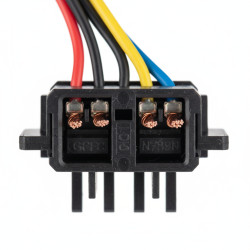
Connect the identified power lines to the correct terminals on the change-over switch, ensuring all connections are robustly tightened and secure to prevent arcing.
Step 6
Double-check every single wire connection against the switch’s wiring diagram. Ensure no bare wires are exposed outside of terminals and all connections are properly insulated.
Step 7
Begin by switching on utility power and testing all household circuits. Then, switch off utility power, activate the generator/UPS, and re-test all circuits to confirm proper change-over functionality.
Common mistakes
- Failing to completely disconnect all power sources, posing severe electrocution risks.
- Using wire gauges that are too small for the electrical load, leading to overheating, insulation damage, and potential fires.
- Not adequately tightening terminal screws, which causes loose connections, arcing, power fluctuations, and fire hazards.
- Incorrectly wiring phase and neutral lines, resulting in appliance damage, electrical shorts, or serious safety issues.
- Omitting the connection of the earth wire, which compromises the entire electrical safety system and increases shock risk.
- Installing a change-over switch with a current rating below the total household load, leading to overload and failure.
When to call a professional
- If you are at all uncertain about identifying specific wires or understanding complex wiring diagrams.
- When your home’s electrical system is complex, involves three-phase power, or has unfamiliar circuit configurations.
- If the installation requires handling high amperage connections that demand specialized tools or expert knowledge.
- If you lack the necessary safety equipment or the correct specialized tools required for the task.
- When existing electrical wiring appears old, damaged, or shows any signs of unsafe conditions.
- To ensure that the installation fully complies with all local electrical codes, safety standards, and regulations.
Want this done properly without the hassle?
Aap DIY try kar sakte hain, lekin agar time nahi ya confidence kam ho, to professional bula lena better hota hai. Galat step se damage ya safety issue ho sakta hai.