How to Prevent Common Exhaust Fan Installation Problems
Want this done properly without the hassle?
Aap DIY try kar sakte hain, lekin agar time nahi ya confidence kam ho, to professional bula lena better hota hai. Galat step se damage ya safety issue ho sakta hai.
Quick answer (read this first)
- Ensure proper fan sizing for effective ventilation.
- Carefully check all electrical wiring and connections.
- Securely mount the fan to prevent vibrations and noise.
- Seal gaps around the fan for optimal airflow and to prevent leaks.
- Always test the fan thoroughly after installation.
Safety first
- ALWAYS turn off power at the main circuit breaker before starting any electrical work.
- Use insulated tools to prevent electrical shocks.
- Wear safety glasses to protect your eyes from debris.
- Ensure proper grounding for the exhaust fan to prevent electrical hazards.
- Do not proceed if you are unsure about any electrical wiring steps.
Tools you may need
- Screwdriver set (Phillips and flathead)
- Wire stripper/cutter
- Electrical tape
- Drill machine
- Measuring tape
- Marker or pencil
- Sealing compound or silicone caulk
- Voltage tester (non-contact recommended)
Step-by-step
Step 1
Always turn off power at the main circuit breaker and verify there is no power with a voltage tester.
Step 2
Select an optimal wall or ceiling location for ventilation, ensuring it is clear of obstructions.
Step 3
Mark and precisely cut an opening that perfectly matches the fan’s dimensions for a snug fit.
Step 4
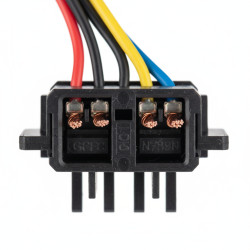
Connect the fan’s live, neutral, and ground wires to your household wiring, ensuring correct polarity and secure connections.
Step 5
Insert the fan into the prepared opening and fasten it firmly with screws or mounting brackets to prevent wobbling and excessive noise.
Step 6
Apply sealing compound or silicone caulk around the fan’s edges to prevent air leaks and moisture ingress, enhancing efficiency.
Step 7
Restore power at the circuit breaker and thoroughly test the fan for correct operation, quietness, and proper airflow.
Common mistakes
- Installing an incorrectly sized fan, leading to inadequate ventilation.
- Making loose or improper electrical connections, which can be hazardous.
- Failing to adequately seal the fan’s edges, resulting in energy loss and potential moisture issues.
- Not securing the fan properly, causing vibrations, noise, and potential damage.
- Forgetting to turn off the main power supply before beginning electrical work.
- Ignoring grounding requirements, which can create a serious electrical safety risk.
When to call a professional
- If you are unsure about any steps involving electrical wiring or connections.
- If the existing electrical wiring in your home appears old, damaged, or complex.
- If the installation requires ductwork through intricate wall or ceiling structures.
- If you encounter persistent electrical problems such as tripping breakers or sparks during the process.
- If you are not comfortable working with power tools, at heights, or with electrical systems.
- If the installation involves structural modifications you are unfamiliar with or uncomfortable performing.
Want this done properly without the hassle?
Aap DIY try kar sakte hain, lekin agar time nahi ya confidence kam ho, to professional bula lena better hota hai. Galat step se damage ya safety issue ho sakta hai.