How to Deep Clean Your Mattress: Safety Checks and Quick Fixes
Want this done properly without the hassle?
Aap DIY try kar sakte hain, lekin agar time nahi ya confidence kam ho, to professional bula lena better hota hai. Galat step se damage ya safety issue ho sakta hai.
Quick answer (read this first)
- Thoroughly vacuum your mattress regularly to eliminate dust and allergens.
- Immediately spot clean spills and stains to prevent them from setting.
- Deodorize your mattress with baking soda to absorb odors effectively.
- Ensure proper ventilation during and after cleaning to prevent moisture accumulation.
- Inspect for wear, damage, or pest signs during routine cleaning.
Safety first
- Ensure adequate ventilation by opening windows and doors to disperse fumes.
- Always wear protective gloves and eye protection when handling cleaning agents.
- Pre-test all cleaning solutions on a hidden area of the mattress to check for discoloration or damage.
- Prevent mold and mildew by strictly avoiding over-wetting the mattress.
- Allow the mattress to air dry completely for several hours before remaking the bed.
- Never mix different cleaning chemicals, especially bleach and ammonia-based products, as this can create toxic fumes.
Tools you may need
- High-powered vacuum cleaner with upholstery and crevice attachments
- Clean microfiber cloths or sponges
- Empty spray bottle
- Mild enzyme-based cleaner or laundry detergent (diluted)
- Baking soda
- Soft brush or scrub brush (for tough stains)
- Clean towels (for blotting excess moisture)
- Portable fan or dehumidifier (for faster drying)
Step-by-step
Step 1
Prepare the Mattress and Room: Remove all bedding, pillows, and mattress covers. Open windows and doors wide to ensure maximum ventilation throughout the cleaning process.
Step 2
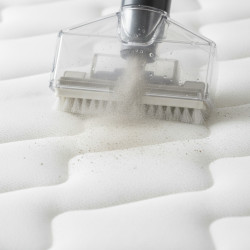
Initial Vacuuming: Use a vacuum cleaner with an upholstery attachment to thoroughly clean the top, sides, and bottom of the mattress. Pay extra attention to seams, tufts, and crevices where dust and debris accumulate.
Step 3
Inspect for Stains and Damage: Carefully examine the mattress surface for any visible stains, tears, indentations, or early signs of pests (e.g., small dark spots, shed skins). Note areas requiring focused attention.
Step 4
Spot Clean Stains: Prepare a cleaning solution by mixing a small amount of mild enzyme-based cleaner or diluted laundry detergent with water in a spray bottle. Lightly spray the stained area (do not saturate) and gently blot with a clean microfiber cloth, working from the outside in. Repeat until the stain lifts, changing cloths as needed. Remember to pre-test the solution on an inconspicuous area first.
Step 5
Deodorize with Baking Soda: Evenly sprinkle a generous layer of baking soda over the entire mattress surface. For best results, allow it to sit for at least 30 minutes, or ideally several hours (up to 24 hours) for maximum odor absorption.
Step 6
Final Vacuuming and Residue Removal: Thoroughly vacuum up all the baking soda from the mattress. Use a crevice tool to ensure no residue is left in seams or tufts, leaving the surface clean and fresh.
Step 7
Air Dry Completely: Prop the mattress up or stand it on its side to facilitate optimal airflow. Allow the mattress to air dry completely for several hours. Use a portable fan or dehumidifier on a cool setting to speed up the drying process. It is crucial that the mattress is absolutely dry before placing any bedding back on it to prevent mold and mildew growth.
Common mistakes
- Over-saturating the mattress with cleaning solutions, leading to deep moisture penetration, mold, and mildew.
- Aggressively scrubbing stains, which can damage fabric fibers or push the stain deeper into the mattress material.
- Failing to allow the mattress to air dry thoroughly before replacing bedding, fostering microbial growth and unpleasant odors.
- Disregarding specific cleaning recommendations or warranties provided by the mattress manufacturer, which can lead to damage.
- Employing harsh chemicals like bleach or ammonia, which can degrade mattress materials, leave irritating residues, and pose health risks.
- Neglecting to ventilate the room properly during and after cleaning, trapping fumes and moisture within the sleeping environment.
When to call a professional
- If faced with extensive, deep-set, or persistent stains that home methods cannot remove effectively.
- Upon discovering signs of bed bugs, dust mites, or other pest infestations, which require specialized and professional treatment.
- For severe or pervasive odors that remain after thorough cleaning and deodorizing attempts with baking soda.
- If you observe significant mold or mildew growth on the mattress, which can pose health risks and be difficult to eradicate DIY.
- For a comprehensive sanitization, especially if you have severe allergies, asthma, or respiratory sensitivities that require a deeper clean.
- If your mattress requires specialized cleaning due to its material (e.g., memory foam, latex) and you are unsure how to proceed safely.
Want this done properly without the hassle?
Aap DIY try kar sakte hain, lekin agar time nahi ya confidence kam ho, to professional bula lena better hota hai. Galat step se damage ya safety issue ho sakta hai.