DIY Door Lock Repair: Step-by-Step Troubleshooting and When to Call a Professional
Want this done properly without the hassle?
Aap DIY try kar sakte hain, lekin agar time nahi ya confidence kam ho, to professional bula lena better hota hai. Galat step se damage ya safety issue ho sakta hai.
Quick answer (read this first)
- Check if the key turns smoothly, tighten loose screws, clean the keyhole, lubricate with graphite powder, and realign the strike plate. Call a professional if the lock is damaged, the key is broken inside, or the bolt won’t retract.
Safety first
- Wear protective gloves to prevent cuts from sharp metal edges or broken parts.
- Never force a stuck key—this can snap it inside the lock, making repair much harder.
- Keep children and pets away from the work area to avoid accidents with small parts or tools.
- Avoid using liquid oils like motor oil—they attract dust and cause long-term damage in Pakistan’s dusty climate.
Tools you may need
- Screwdriver (flathead and Phillips)
- Graphite powder (preferred) or dry lubricant
- Tape measure or ruler
- Pliers
- Soft cloth or brush
- Compressed air canister (optional but helpful)
Step-by-step
Step 1
Inspect the key: Insert and turn it slowly. If it doesn’t move at all, do not force it—proceed to lubrication or call a pro.
Step 2
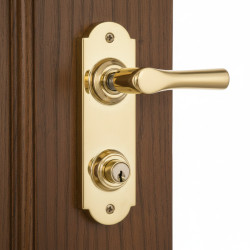
Remove the interior door handle by unscrewing the two mounting screws on the plate behind the handle.
Step 3
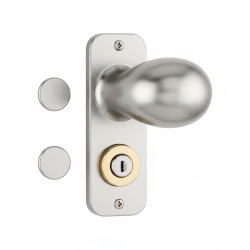
Gently pull out the lock cylinder and check for bent pins, broken springs, or visible debris inside the mechanism.
Step 4
Clean the keyhole and lock interior using a soft brush or compressed air to remove dust, dirt, or rust buildup common in Pakistani homes.
Step 5
Apply a small amount of graphite powder into the keyhole and insert the key, turning it slowly 5–10 times to distribute the lubricant evenly.
Step 6
Check the strike plate on the door frame: If the bolt doesn’t slide in smoothly, loosen its screws, adjust its position, and retighten to align with the bolt’s path.
Step 7
Reassemble the lock components, ensuring all screws are snug but not over-tightened, then test the lock with the key and handle multiple times.
Common mistakes
- Using WD-40 or motor oil instead of graphite powder—oil attracts dust and creates sticky residue that worsens lock performance in dusty environments.
- Forcing a stuck key—this can snap the key, damage internal pins, or crack the lock cylinder beyond repair.
- Skipping lubrication entirely—dry locks in Pakistan’s dusty climate wear out quickly and become harder to operate over time.
- Over-tightening screws—this warps the door frame or lock casing, causing misalignment and new binding issues.
- Ignoring strike plate alignment—many ‘lock problems’ are actually caused by a misaligned strike plate, not a faulty lock.
- Reassembling without testing each step—always test movement after lubrication and before fully tightening screws.
When to call a professional
- The key breaks off inside the lock and cannot be removed with pliers.
- The lock bolt is bent, twisted, or the lock body has visible cracks or deformation.
- The door won’t latch or stay closed even after properly adjusting the strike plate.
- You hear grinding, clicking, or scraping sounds when turning the key, indicating internal damage.
- The lock is heavily rusted, corroded, or worn out from years of use and won’t respond to cleaning or lubrication.
Want this done properly without the hassle?
Aap DIY try kar sakte hain, lekin agar time nahi ya confidence kam ho, to professional bula lena better hota hai. Galat step se damage ya safety issue ho sakta hai.