Troubleshooting Tripped Phase Breakers & Quick Fixes
Want this done properly without the hassle?
Aap DIY try kar sakte hain, lekin agar time nahi ya confidence kam ho, to professional bula lena better hota hai. Galat step se damage ya safety issue ho sakta hai.
Quick answer (read this first)
- Safely identify a tripped phase breaker.
- Turn off main power before any inspection or troubleshooting.
- Troubleshoot common causes like circuit overloads.
- Attempt a safe reset procedure for the breaker.
- Know precisely when to stop your DIY efforts and call a professional electrician.
Safety first
- ALWAYS turn off the main power supply before touching any electrical components or the distribution board.
- Never attempt to touch live wires. Always assume wires are live until confirmed otherwise.
- Use only insulated tools and wear dry, rubber-soled shoes for personal insulation.
- Never force a breaker back ‘on’ if it immediately trips again. This indicates a serious fault.
- Do not bypass or tamper with a tripped breaker; it’s a critical safety device designed to protect your home.
- If you are unsure or uncomfortable at any point, immediately stop and call a certified electrician.
Tools you may need
- Insulated screwdriver set.
- Flashlight.
- Multimeter or voltage tester (optional, for advanced checks).
Step-by-step
Step 1
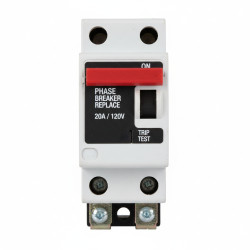
Locate the Tripped Breaker: Go to your main electrical distribution board. Identify the breaker switch that is in the ‘off’, ‘middle’, or ‘tripped’ position (which often looks different from a manually switched ‘off’ position).
Step 2
Cut Main Power Supply: BEFORE touching anything, switch off the main circuit breaker for your entire house. Confirm all power is off in the affected area. This is critical for your safety.
Step 3
Visual Inspection for Damage: With main power off, carefully examine the tripped breaker and the surrounding area. Look for any signs of burning, melting, smoke residue, or unusual odors. If any are present, DO NOT proceed and call a professional immediately.
Step 4
Identify Potential Overload: Consider what electrical appliances or devices were running when the breaker tripped. Unplug all high-power appliances (e.g., irons, heaters, AC units) connected to the affected circuit. This helps prevent immediate re-tripping if it was an overload.
Step 5
Attempt to Reset the Breaker: Firmly push the tripped breaker completely to the ‘OFF’ position first, then firmly push it all the way to the ‘ON’ position. Do not hesitate or attempt to force it.
Step 6
Restore Main Power & Observe: Switch the main circuit breaker for your house back ‘ON’. Check if power is restored to the previously affected circuit.
Step 7
Monitor for Re-tripping & Test: If power is restored, plug in appliances one by one, starting with low-power items, to identify if a specific appliance causes the trip. If the breaker trips again immediately after resetting or after plugging in a single item, DO NOT attempt further resets. This indicates a serious fault requiring professional help.
Common mistakes
- Ignoring recurring breaker trips, which often signal a more serious underlying electrical issue that needs professional attention.
- Repeatedly resetting a breaker without first attempting to identify and address the cause, such as an overloaded circuit or a faulty appliance.
- Failing to turn off the main power supply before inspecting or touching any components of the distribution board, risking electric shock.
- Using non-insulated tools or working in wet conditions, significantly increasing the risk of electric shock and serious injury.
- Attempting complex electrical repairs or permanent wiring solutions without proper training, experience, or certification.
When to call a professional
- The phase breaker trips immediately or repeatedly after being reset, even without any load, indicating an electrical fault.
- You notice burning smells, smoke, sparks, or visible damage (like scorching or melting) around the breaker or the distribution board.
- Multiple breakers are tripping frequently, suggesting a broader electrical system issue rather than an isolated circuit problem.
- You hear unusual buzzing sounds, crackling, or feel excessive heat coming from the distribution board.
- You are unsure about the underlying cause of the trip, or you feel uncomfortable performing any of the troubleshooting steps yourself.
- For any actual phase breaker replacement, new circuit installation, or complex wiring diagnostics, which always require a certified electrician.
Want this done properly without the hassle?
Aap DIY try kar sakte hain, lekin agar time nahi ya confidence kam ho, to professional bula lena better hota hai. Galat step se damage ya safety issue ho sakta hai.