Preventing Common Water Tank Cleaning Problems & Ensuring Purity
Want this done properly without the hassle?
Aap DIY try kar sakte hain, lekin agar time nahi ya confidence kam ho, to professional bula lena better hota hai. Galat step se damage ya safety issue ho sakta hai.
Quick answer (read this first)
- Regularly inspect and clean your water tank.
- Ensure your tank is properly sealed to prevent contamination.
- Install and maintain a good quality inlet filter.
- Periodically drain your tank to remove stagnant water and sediment.
Safety first
- Never enter a water tank alone; ensure someone is supervising.
- Always turn off the electricity to all water pumps connected to the tank before starting.
- Wear protective gear: gloves, safety goggles, and a mask to avoid inhaling fumes or dust.
- Ensure adequate ventilation when working inside or around the tank.
- Avoid mixing different cleaning chemicals, as this can produce dangerous fumes.
- Stop immediately if you feel dizzy, unwell, or have difficulty breathing.
Tools you may need
- Bucket
- Stiff-bristled brush or scrubbing pad
- Mop or sponge
- Garden hose
- Mild bleach solution (optional) or commercial tank cleaner
- Safety goggles, gloves, and mask
Step-by-step
Step 1
Preparation: Isolate & Drain the Tank. Turn off the main water supply valve leading to your water tank. Open all water outlets in your home to drain the tank until only a few inches of water remain at the bottom.
Step 2
Crucial Safety: Disconnect Power. Immediately turn off the electrical supply to all water pumps connected to the tank. This prevents accidental operation and electrocution risk.
Step 3
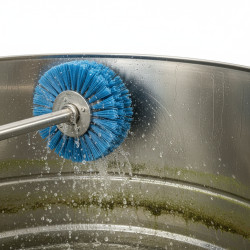
Initial Scrubbing: Remove Major Deposits. Using a stiff-bristled brush or scrubbing pad, thoroughly scrub the interior walls, floor, and lid of the tank. Focus on dislodging sediment, algae, and grime.
Step 4
Rinse & Evacuate Debris. Use a powerful stream from a garden hose to rinse all scrubbed surfaces. Direct the dirty water and loosened debris towards the tank’s drain outlet for removal.
Step 5
Deep Cleaning (Optional): Tackle Stubborn Grime. For persistent stains or heavy buildup, apply a mild bleach solution (1 part bleach to 10 parts water) or a specific commercial tank cleaner. Scrub again, allowing the solution to work for a short period as per product instructions, then rinse thoroughly multiple times. (Refer to Safety: Do NOT mix chemicals.)
Step 6
Final Flush: Eliminate Residues. Close the tank’s drain valve. Refill the tank completely with fresh water, then drain it again entirely. Repeat this flushing process once or twice to ensure all cleaning agents are removed.
Step 7
Recommissioning: Refill & Restore. Once fully flushed and clean, securely close the drain valve. Refill the tank with fresh water and turn the main water supply back on. Restore power to the water pumps. Your tank is now clean and ready for normal household use.
Common mistakes
- Infrequent or irregular cleaning of the water tank.
- Not fully draining the tank before attempting to clean it.
- Using harsh or inappropriate chemicals that can contaminate the water or damage the tank.
- Ignoring essential safety precautions like turning off power or ensuring ventilation.
- Failing to thoroughly flush the tank after cleaning, leaving chemical residues.
- Not inspecting the tank for structural issues during cleaning.
When to call a professional
- If your water tank is too large or tall to access safely and effectively on your own.
- When you notice visible cracks, leaks, or significant structural damage to the tank.
- If there is a persistent foul smell, taste, or discoloration in your water despite cleaning.
- When your plumbing system involves complex filtration, pressure systems, or multiple interconnected tanks.
- If there are recurring health concerns or waterborne illnesses linked to your household water supply.
- You lack the proper safety equipment, tools, or experience to perform the cleaning safely and effectively.
Want this done properly without the hassle?
Aap DIY try kar sakte hain, lekin agar time nahi ya confidence kam ho, to professional bula lena better hota hai. Galat step se damage ya safety issue ho sakta hai.