DIY Door Stopper Installation: Step-by-Step Troubleshooting and When to Call a Professional
Want this done properly without the hassle?
Aap DIY try kar sakte hain, lekin agar time nahi ya confidence kam ho, to professional bula lena better hota hai. Galat step se damage ya safety issue ho sakta hai.
Quick answer (read this first)
- Install a rubber or magnetic door stopper by marking the contact point, drilling a pilot hole if needed, screwing it in securely, and testing the door—no professional required for standard interior doors.
Safety first
- Wear safety goggles when drilling or hammering to protect your eyes from wood chips or dust.
- Keep hands and fingers away from the door’s path when testing its movement.
- Never install a door stopper on a door frame that is cracked, warped, or shows signs of rot—this can worsen structural damage.
- Avoid metal stoppers on painted walls or floors to prevent scratches and surface damage.
- Do not use adhesive-only stoppers in humid climates like Pakistan’s—they lose grip quickly and fail under repeated use.
Tools you may need
- Screwdriver (flathead or Phillips)
- Drill with 3-4mm pilot bit
- Pencil for marking
- Measuring tape
- Rubber or magnetic door stopper suitable for your floor and door type
Step-by-step
Step 1
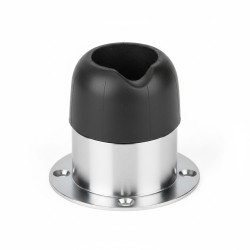
Choose the right stopper: use rubber stoppers for wooden or tiled floors, and magnetic ones for metal door frames or surfaces.
Step 2
Close the door fully and identify where it makes contact with the wall or floor—this is where the stopper must be placed.
Step 3
Hold the stopper against the wall or floor at the contact point and trace its outline with a pencil for accurate placement.
Step 4
If installing on hardwood or solid wood, drill a small pilot hole to prevent the frame or floor from splitting when screws are inserted.
Step 5
Secure the stopper with screws using a screwdriver—tighten until snug, but never overtighten, as this can crack the material.
Step 6
Slowly open and close the door several times to test alignment; adjust position if the door hits too hard or doesn’t stop smoothly.
Common mistakes
- Placing the stopper too close to the hinge, which forces the door to bend and strains the hinges over time.
- Relying on adhesive-only stoppers in Pakistan’s humid climate—they peel off within weeks due to moisture and dust.
- Using rubber stoppers on polished tile or marble floors without non-slip backing—they slide and become ineffective.
- Skipping pilot holes in hardwood frames, leading to cracks around screw holes and loose installation.
- Installing on uneven floors without checking door swing—this causes misalignment and uneven pressure on the stopper.
- Ignoring the door’s weight—light stoppers won’t hold heavy doors, causing them to bounce back and damage walls.
When to call a professional
- The door frame is cracked, warped, or shows signs of rot or termite damage.
- You need to install stoppers on multiple heavy, commercial-grade, or exterior doors that require reinforced mounting.
- Electrical wiring, plumbing pipes, or gas lines are located behind or near the intended installation spot.
- The door still doesn’t close or latch properly even after installing the stopper—this indicates alignment or hinge issues.
Want this done properly without the hassle?
Aap DIY try kar sakte hain, lekin agar time nahi ya confidence kam ho, to professional bula lena better hota hai. Galat step se damage ya safety issue ho sakta hai.